
"Robusta flowers"
2000 article(s) found

A brief introduction to the Origin, Development, History and Culture of Iron Card Fine Coffee beans with slightly fruity Flavor
Small grain coffee is suitable for growing in the mountains at an altitude of 8001800 meters. If the altitude is too high, it will taste sour, and if it is too low, it will taste bitter. Small grains of coffee are mostly planted in dry and hot valleys about 1100 meters above sea level, so they are moderately sour, rich and mellow. There is a unique environment suitable for the growth of small seed coffee in many areas of Yunnan, and the quality of small seed coffee is excellent. The planting area is mainly distributed in the

A brief introduction to the description of the flavor, taste and aroma characteristics of high-quality coffee beans with excellent performance.
Due to the unique geographical environment and climatic conditions, Yunnan coffee has formed a unique flavor of strong but not bitter, fragrant but not strong, with a little fruit flavor. World-class coffee experts evaluate it as a good coffee in the world, and its cultivation techniques and per unit yield are also world-class. Yunnan coffee is a variant of the Arabian original species, which is generally called Yunnan small-grain coffee after long-term cultivation and domestication.

What's the difference between Arabica and Robusta? Is Arabica all over the boutique coffee?
Coffee has a long history, and it was not until the third wave of coffee that people had the enthusiasm to explore every step in the production process of a cup of coffee: how farmers grow it, how workers harvest it, how to deal with coffee, and how bean bakers find the most suitable roasting method for this coffee bean. The beautiful coffee from the seed originated from a seed and from a plant.

An introduction to the Flavor description of Katim Coffee beans in Yunnan Province
Yunnan Katim coffee bean flavor description grinding scale treatment manor production area introduction Yunnan small grain coffee 3-year-old 4-year-old fruit tree. Coffee is a short-day plant. Coffee has the characteristics of multiple flowering and concentrated florescence. The florescence of small seed coffee in Yunnan is from February to July, and the flowering period is from March to May. The flowering of coffee is greatly affected by climate, especially rainfall and temperature.

Excellent performance of iron card boutique coffee beans planting situation, geographical location, climate and altitude
Bourbon: this variety is derived from the iron pickup and was expanded by the French in 1708 on the island of Bourbon (now known as Reunion). Bobang also has a beautiful aroma and rich taste, higher yield and growth than iron pickup, suitable for planting in an area of 12002000 meters, but less resistant to diseases and pests, and more sensitive to strong winds and heavy precipitation. Wave

What are the characteristics of Robusta and Arabica How to identify Robusta coffee beans
Robusta coffee beans and Arabica coffee beans can be said to be our two most common beans, so what is the difference between the two? Arabica coffee refers to Arabica coffee tree species, accounting for about 70% to 80% of the world's coffee production, mostly planted on fire slopes or plateaus above 500 to 1500 meters above sea level. Bean shape is elliptical

Should cold coffee go with it? What do you have for cold coffee?
Professional coffee knowledge exchange more coffee bean information Please pay attention to the coffee workshop (Wechat official account cafe_style) Coffee flavor varies according to the treatment and baking depth, and how to match with the dim sum? (photo Source: happiness Culture) the effect of coffee bean treatment on flavor traditionally, raw beans are picked and processed, which can be divided into sun exposure according to local climate conditions.

Introduction of Coffee Origin-Asian "Laos, Thailand, Myanmar, Nepal"
Professional baristas Please follow the Coffee Workshop (Wechat official account cafe_style) as for Lao coffee produced in Laos, before the emergence of Europeans in Taiwan coffee enterprises, Lao coffee rarely appeared in Taiwan's raw bean trading system. However, the coffee culture in Laos also began before World War II. In 1927, 90% of the output of the Borofen volcano in Laos was exported to French businessmen and sold to Europe.

A brief introduction to the planting Market Price of Red Top Coffee Iron Card Fine Coffee Bean varieties
Bourbon: this variety is derived from the iron pickup and was expanded by the French in 1708 on the island of Bourbon (now known as Reunion). Bobang also has a beautiful aroma and rich taste, higher yield and growth than iron pickup, suitable for planting in an area of 12002000 meters, but less resistant to diseases and pests, and more sensitive to strong winds and heavy precipitation. Wave

A brief introduction to the description of flavor, taste and aroma characteristics of coffee beans with strong aroma
Typica: the most classic high-quality Arabica species, which is derived from many commercial improvements at present. It has excellent taste and is recognized as a boutique coffee variety, but its yield is very low and it is vulnerable to rust, so more manpower management is needed. Tieka Coffee, native to Ethiopia and southeastern Sudan, is the most widely cultivated variety of coffee in the Western Hemisphere. Plant
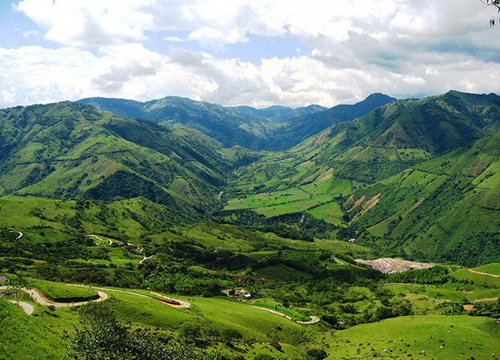
Papua New Guinea PNG Chimaire Manor is a robusta or arabica species ah? coffee
Coffee has more than 100 coffee varieties, the more common coffee are: Arabica Arabica, outstanding personality, unique flavor, is the main boutique coffee, mainly used for coffee shop operations and high-end coffee market supply; Robusta Robusta, flavor rough, high caffeine content, not a boutique coffee, often used for instant coffee processing and Italian coffee mixed beans. Ethiopia Typi

A brief introduction to the treatment method of grinding degree and baking degree of fragrant iron card fine coffee beans
The two classic high-quality coffee varieties, Typica and Bourbon, are the main cultivated varieties in Yunnan, and the Catimor series were introduced from Kenya in 1991 (stronger anti-virus ability and higher yield). A variety of Arabian species (also known as small seed species). Because the morphology and habits of the two varieties are similar, the two varieties are mostly mixed. Cloud
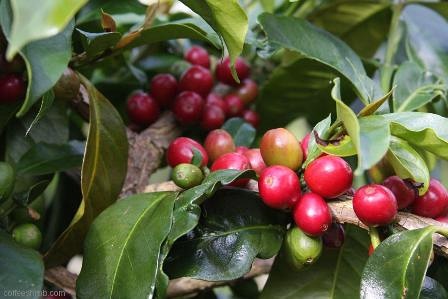
Brazilian bourbon beans are robusta or arabica? Coffee bean varieties
The global coffee bean species are mainly divided into: Arabica (Arabica) and Robusta (Canephora), of which Arabica coffee beans account for about 70%80%coffee has more than 100 coffee varieties, more common coffee are: Arabica Arabica, outstanding personality, unique flavor, is the main boutique coffee, mainly used for coffee shop operations and high-end coffee market supply; Robusta

A brief introduction to the origin, development, history and culture of the most classic tin card boutique coffee beans
All the varieties planted in Pu'er area of Yunnan are catimor (Katim). As early as 1950s, typica and bourbon were introduced in Baoshan City, and the locals called them old varieties. Because the old varieties have low disease and pest resistance and yield, and the management is relatively expensive and manpower, coupled with the market purchase price does not have many advantages, brown farmers have changed to new varieties in recent years.

A brief introduction to the planting situation, geographical location, climate and altitude of high-quality coffee beans with strong aroma
Typica and Bourbon, two classic high-quality coffee varieties, are the main coffee varieties in Yunnan. In 1991, a series of Catimor varieties were introduced from Kenya (stronger anti-virus ability and higher yield). A variety of Arabian species (also known as small seed species). Because the morphology and habits of the two varieties are similar, the two varieties are mostly mixed. Yunnan area

Cold coffee is no different from hot coffee. What's the difference between cold coffee and hot coffee?
Professional coffee knowledge exchange more coffee bean information Please pay attention to the coffee workshop (Wechat official account cafe_style) Coffee flavor varies according to the treatment and baking depth, and how to match with the dim sum? Effect of coffee bean treatment on flavor traditionally, raw beans can be divided into sun drying (Nature) and water washing (W) according to local climatic conditions.

A brief introduction to the description of the flavor, taste and aroma characteristics of the fine coffee bean with slightly fruity flavor.
After inspecting the coffee planting and primary processing base in Yunnan, international coffee organization tasting experts rated Yunnan coffee as the kind of small seed coffee processed by Colombian wet processing, which is the highest quality coffee in the world. Typica and Bourbon, two classic high-quality coffee varieties, are the main coffee varieties in Yunnan, and Katimo was introduced from Kenya in 1991.
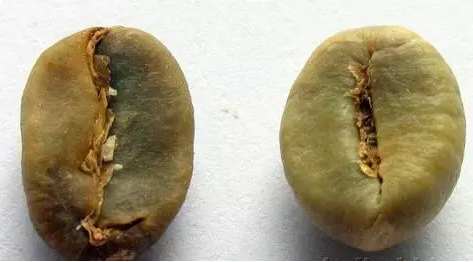
How to quickly tell the difference between Robusta and Arabica?
Professional coffee knowledge exchange More coffee bean information Please pay attention to coffee workshop (Weixin Official Accounts cafe_style) Coffee raw material is coffee beans Basic identification of coffee beans, according to the characteristics of coffee beans to mix different flavors of coffee, is the most basic work of barista. Domestic coffee beans are more dependent

How many varieties of coffee beans are there in the world
There are more than 70 kinds of coffee in the world, of which 3 are mainly cultivated in China. ① small seed species, also known as Arabica coffee, is native to Ethiopia and is cultivated in Taiwan, Fujian, Guangdong, Guangxi, Yunnan and Sichuan. Shrub, 4-6 m tall, with many branches in the basal part; leaves thinly leathery, ovate-lanceolate or lanceolate, entire or undulate, terminal bud green or bronzed, so

How many varieties of coffee beans are there in the world
There are more than 70 kinds of coffee in the world, of which 3 are mainly cultivated in China. ① small seed species, also known as Arabica coffee, is native to Ethiopia and is cultivated in Taiwan, Fujian, Guangdong, Guangxi, Yunnan and Sichuan. Shrub, 4-6 m tall, with many branches in the basal part; leaves thinly leathery, ovate-lanceolate or lanceolate, entire or undulate, terminal bud green or bronzed, so